The Ultimate Guide to Color Matching Outfits for Impact and Harmony
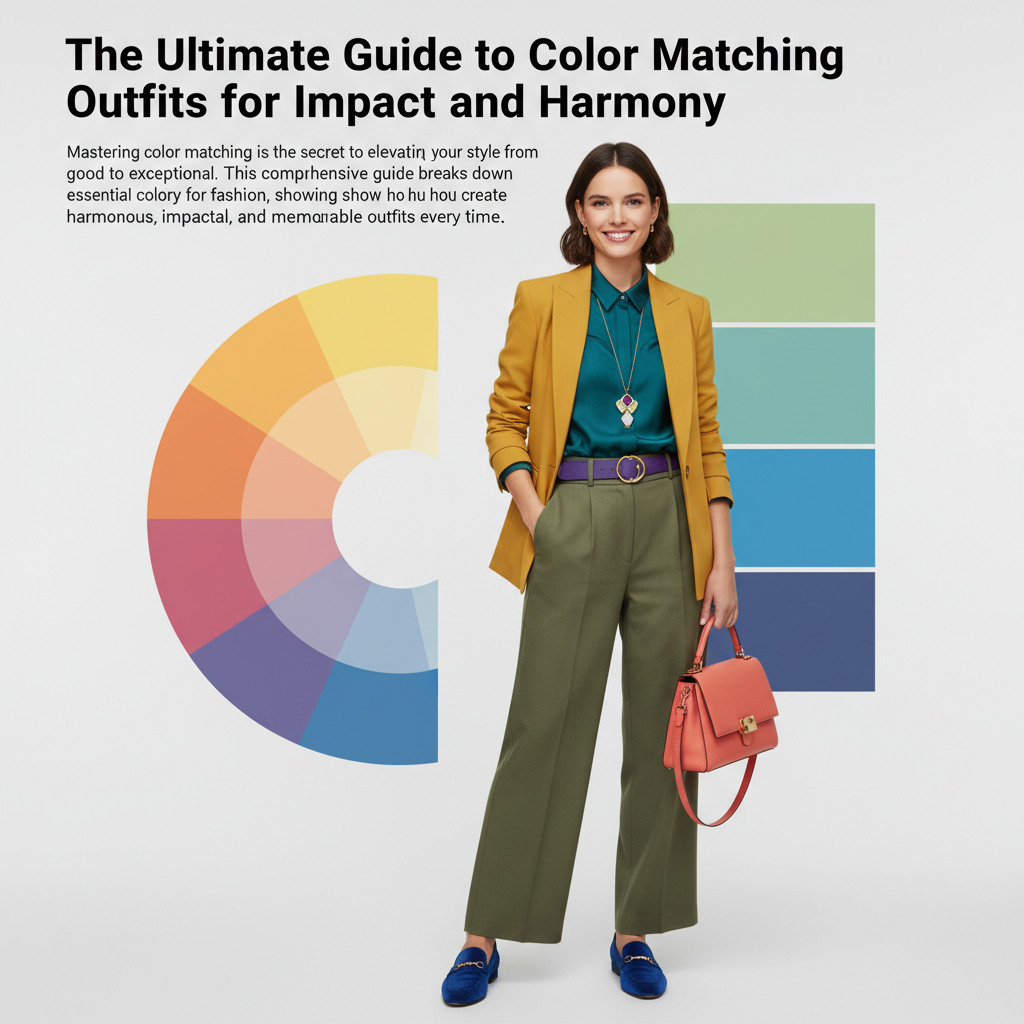
Mastering color matching is the secret to elevating your style from good to exceptional. This comprehensive guide breaks down essential color theory for fashion, showing you how to create harmonious, impactful, and memorable outfits every time.
The Ultimate Guide to Color Matching Outfits for Impact and Harmony
Color is one of the most powerful tools in your fashion arsenal. It can instantly convey mood, flatter your complexion, and make a statement without saying a word. Yet, many people feel intimidated by color matching, sticking to neutrals for fear of getting it wrong. This guide will demystify color theory, providing you with practical rules and inspiration to confidently mix and match hues for stunning results.
Understanding the Color Wheel
At the heart of color matching is the color wheel. This circular diagram organizes colors based on their relationships, making it easy to understand how they interact.
- Primary Colors: Red, blue, and yellow. These are the foundational colors from which all others are mixed.
- Secondary Colors: Orange, green, and purple. Created by mixing two primary colors.
- Tertiary Colors: Red-orange, yellow-orange, yellow-green, blue-green, blue-violet, and red-violet. Formed by mixing a primary and a secondary color.
Key Color Schemes for Fashion
Different color schemes evoke different feelings and levels of contrast. Here are the most effective ones for your wardrobe:
1. Monochromatic
This scheme uses different shades, tints, and tones of a single color. It's sophisticated, elegant, and elongating. Think an all-navy outfit with varying textures, or a pale pink sweater with a deeper rose skirt.
- Tip: Play with textures (silk, wool, leather) to add depth and prevent the outfit from looking flat.
- Tip: Incorporate subtle patterns or prints within the same color family.
2. Analogous
Analogous colors are next to each other on the color wheel (e.g., blue, blue-green, and green). This creates a harmonious and visually pleasing flow, as the colors share a common hue.
- Tip: Choose one dominant color and use the others as accents.
- Tip: Vary the intensity or lightness of the colors to add interest without losing harmony.
3. Complementary
Complementary colors are opposite each other on the color wheel (e.g., red and green, blue and orange, yellow and purple). This creates high contrast and a vibrant, energetic look.
- Tip: Use one color as the main garment and the complementary color as an accent (e.g., a blue dress with orange shoes or a scarf).
- Tip: For a softer look, use muted or pastel versions of complementary colors.
4. Triadic
Triadic schemes use three colors evenly spaced on the color wheel (e.g., red, yellow, and blue). This creates a balanced, yet bold and lively combination.
- Tip: Allow one color to dominate, with the other two used in smaller proportions.
- Tip: This scheme works well with muted tones for everyday wear, or bright, saturated hues for statement outfits.
5. Neutral with Pop
Neutrals (black, white, gray, beige, navy) are versatile and form the backbone of many wardrobes. Adding a single, vibrant pop of color can instantly elevate an otherwise understated outfit.
- Tip: Use accessories like a colorful handbag, shoes, or a statement necklace to introduce the pop.
- Tip: Consider a bright blouse or jacket with an otherwise neutral base.
Practical Tips for Effortless Color Matching
- Start Small: If you're new to color, begin with monochromatic or analogous schemes, or introduce single pops of color with accessories.
- Consider Your Skin Tone: Certain colors can make your skin glow, while others can wash you out. Understand if you have warm, cool, or neutral undertones to choose flattering shades.
- Balance Brightness: When mixing bright colors, ensure there's a neutral element or a darker shade to ground the look.
- Texture Matters: Even with the same color, different textures (e.g., a knit sweater and leather skirt) add visual interest and sophistication.
- Trust Your Eye: Ultimately, fashion is personal. If an outfit makes you feel confident and happy, that's what matters most!
By understanding these fundamental principles, you'll gain the confidence to experiment with color, creating outfits that are not only stylish but also uniquely yours. Let Ask Mirror help you rate your color combinations and perfect your vibrant style!
Frequently Asked Questions
- What's the easiest way to start experimenting with color?
- Start with monochromatic outfits (different shades of one color) or by adding a single bright accessory to a neutral base. This builds confidence without overwhelming you.
- How do I know if a color flatters my skin tone?
- Generally, cool undertones look good in blues, purples, and emerald greens, while warm undertones suit reds, oranges, and earthy tones. Neutral undertones can wear most colors. Observe how different colors make your skin look in natural light.