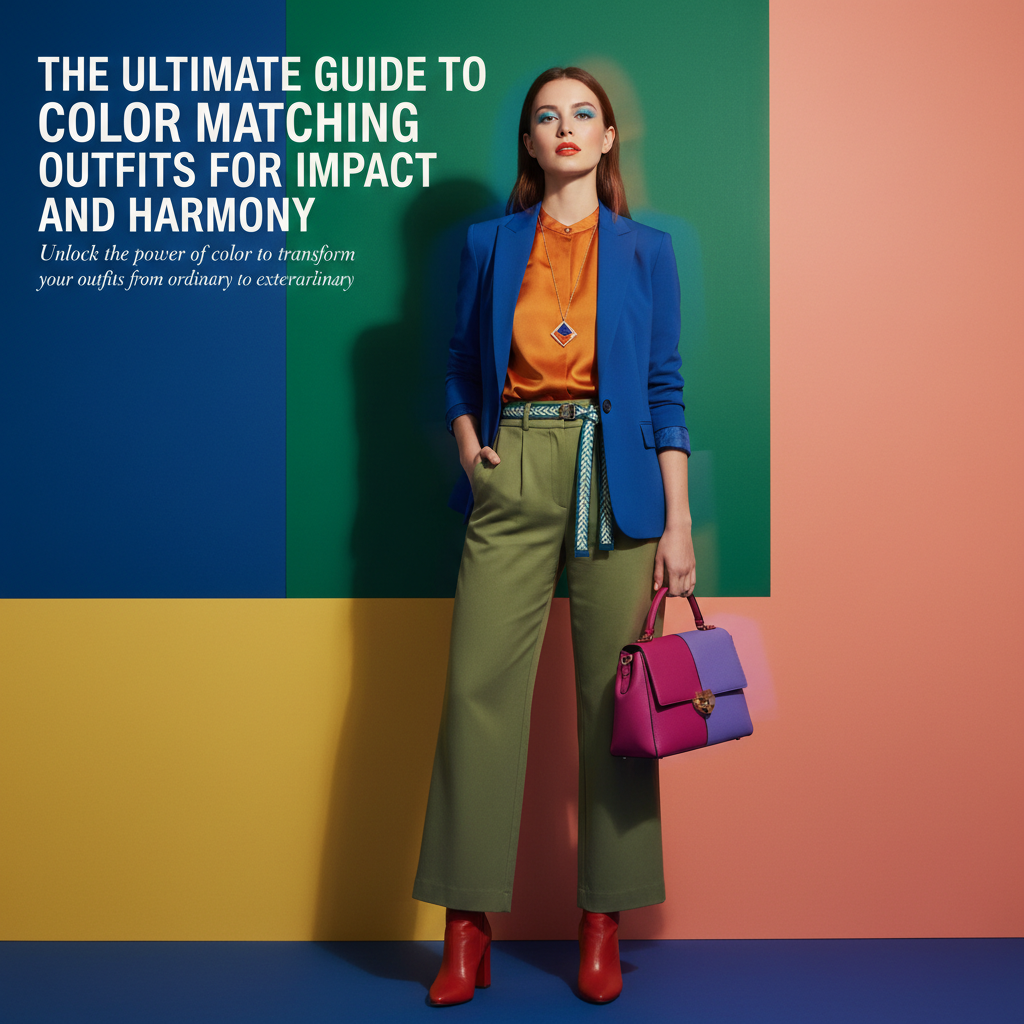
The Ultimate Guide to Color Matching Outfits for Impact and Harmony
Unlock the power of color to transform your outfits from ordinary to extraordinary. This comprehensive guide delves into color theory basics, complementary and analogous palettes, and practical tips to mix and match colors like a pro, ensuring every ensemble makes a statement.
Understanding the Color Wheel
The color wheel is your best friend when it comes to matching colors. It visually represents the relationships between primary, secondary, and tertiary colors. Learning its structure allows you to confidently create harmonious or contrasting outfits.
- Primary Colors: Red, blue, yellow – the foundational colors.
- Secondary Colors: Green, orange, violet – created by mixing primary colors.
- Tertiary Colors: Red-orange, blue-green, etc. – created by mixing a primary and a secondary color.
Core Color Matching Principles
There are several established principles that stylists use for effective color matching:
1. Complementary Colors
These are colors directly opposite each other on the color wheel (e.g., red and green, blue and orange, yellow and purple). They create high contrast and vibrant, eye-catching looks. Use one color as dominant and the other as an accent.
2. Analogous Colors
These are colors next to each other on the color wheel (e.g., blue, blue-green, green). They create a harmonious, pleasing, and less contrasting look. Stick to 2-3 colors within this scheme for elegance.
3. Monochromatic Colors
Utilize different shades, tints, and tones of a single color. This creates a sophisticated, cohesive, and elongated look. Varying textures within a monochromatic outfit adds depth and interest.
4. Triadic Colors
These are three colors evenly spaced on the color wheel (e.g., red, yellow, blue). Triadic schemes are bold and dynamic but can be challenging to balance. Use one color dominantly and the others as accents.
Practical Tips for Everyday Styling
- Start with Neutrals: Black, white, grey, navy, and beige are versatile bases that pair well with almost any color. Build your outfit around a neutral foundation.
- Consider Your Skin Tone: Warm skin tones often look great in earthy tones, yellows, oranges, and warm reds. Cool skin tones shine in blues, greens, purples, and cool reds.
- Don't Forget Texture: Incorporating different textures (e.g., silk, wool, leather) can add richness and visual interest to a monochromatic or analogous outfit, even without varied colors.
- The 60-30-10 Rule: For a balanced look, aim for 60% of your outfit in a dominant color, 30% in a secondary color, and 10% in an accent color (often a complementary shade).
- Use Accessories as Accents: If you're hesitant to wear bold colors, introduce them through accessories like scarves, bags, shoes, or jewelry.
FAQ
Frequently Asked Questions
- What is the easiest way to start color matching?
- Start with analogous colors or monochromatic schemes. These are inherently harmonious and less prone to clashes than high-contrast complementary pairings. Also, using neutrals as your base is always a safe bet.
- Should I match my shoes and bag to my outfit colors?
- Not necessarily. While a perfectly matched bag and shoes can create a polished look, it's often more modern and stylish to choose accessories in complementary or neutral tones that tie into the overall palette without being an exact match.