The Ultimate Guide to Color Matching Outfits for Impact and Harmony
Master the art of color matching to create visually stunning and cohesive outfits. This guide covers color theory basics, practical techniques for combining hues, and tips for choosing colors that flatter your skin tone, ensuring every ensemble makes a powerful statement.
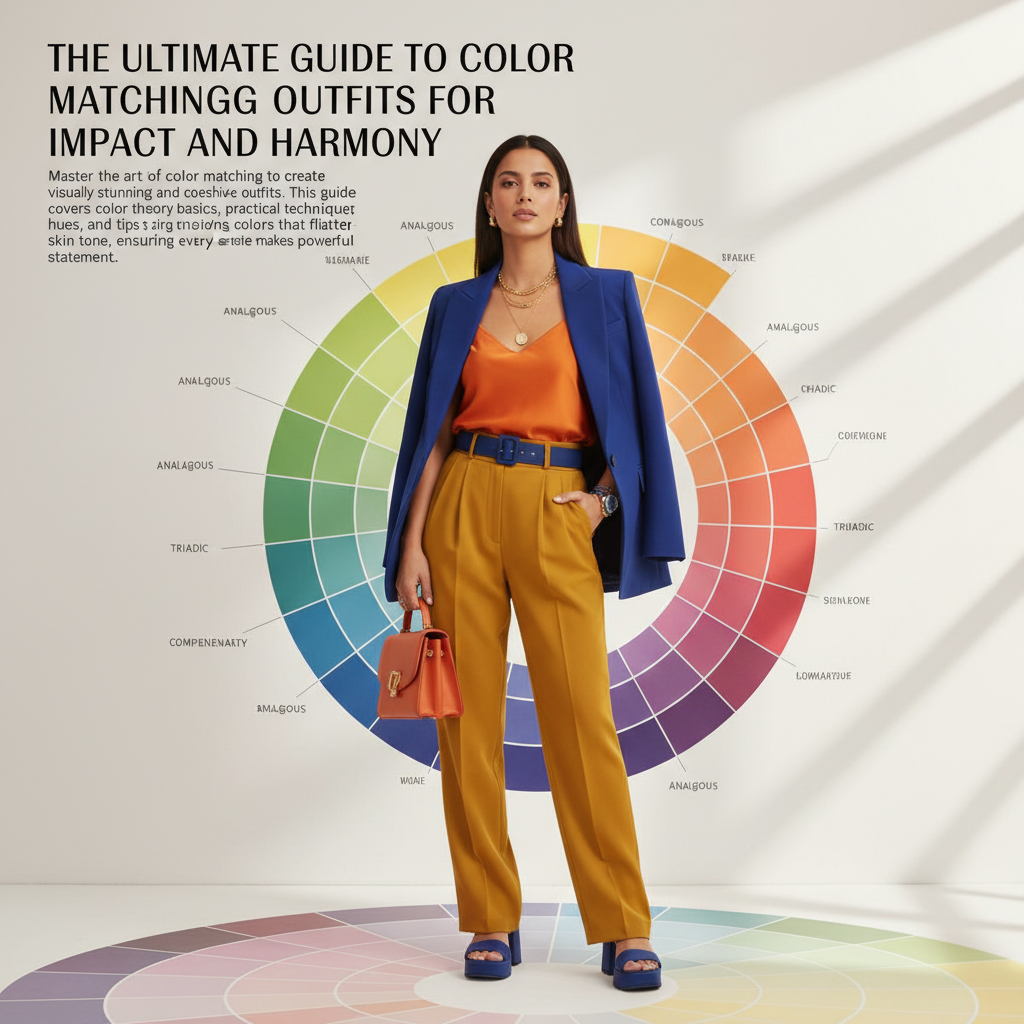
The Ultimate Guide to Color Matching Outfits for Impact and Harmony
Color is one of the most powerful tools in your fashion arsenal. When used effectively, it can transform an ordinary outfit into an extraordinary one, expressing mood, personality, and professionalism. But knowing how to combine colors harmoniously can feel like a complex puzzle. This guide will demystify color matching, providing you with the principles and practical tips to create impactful and balanced looks.
Understanding the Color Wheel: Your Foundation
The color wheel is the stylist's best friend. It visually organizes colors, making it easier to understand their relationships.
- Primary Colors: Red, blue, and yellow. These are the base colors from which all others are mixed.
- Secondary Colors: Orange, green, and purple. Created by mixing two primary colors.
- Tertiary Colors: Red-orange, yellow-orange, yellow-green, blue-green, blue-violet, and red-violet. Formed by mixing a primary and a secondary color.
Key Color Schemes for Outfit Building
To create a harmonious look, familiarize yourself with these common color schemes:
1. Monochromatic
This scheme uses different shades, tints, and tones of a single color. It’s elegant, sophisticated, and creates a cohesive, elongated silhouette. Think a dark green blazer with a lighter green top and olive trousers.
2. Analogous
Analogous colors sit next to each other on the color wheel (e.g., blue, blue-green, and green). This scheme is inherently harmonious and pleasant to the eye, offering a subtle contrast.
3. Complementary
Complementary colors are opposite each other on the color wheel (e.g., red and green, blue and orange, yellow and purple). They offer the strongest contrast and can create a vibrant, high-impact look when used correctly. Use one color dominantly and the other as an accent.
4. Triadic
Triadic schemes use three colors equally spaced around the color wheel (e.g., red, yellow, and blue). This combination is bold and playful but can be tricky. Balance is key – let one color be dominant and use the others as accents.
Practical Tips for Effortless Color Matching
- Start with Neutrals: Black, white, grey, navy, and beige are versatile and form a fantastic base for any outfit. They allow brighter colors to pop without overwhelming the look.
- The 60-30-10 Rule: A popular guideline for balancing colors. Your dominant color should take up about 60% of your outfit, a secondary color 30%, and an accent color 10%. For example, a navy suit (60%), a light blue shirt (30%), and a red tie (10%).
- Consider Your Skin Tone: Certain colors flatter different skin undertones. Warm undertones often shine in earthy tones like olive, brown, and gold, while cool undertones look great in blues, purples, and emerald green. Unsure? Ask Mirror can help you find your best colors!
- Texture Adds Depth: When working with monochromatic or analogous schemes, introduce different textures (e.g., a silk top with wool trousers) to add visual interest without needing more colors.
- Use Accessories for Pop: If you're hesitant about bold color combinations, use accessories like scarves, handbags, or shoes to introduce a complementary or accent color.
- Match Metals: Decide if you're a gold or silver person for a particular outfit and stick with it for all your jewelry and hardware.
Mastering color matching takes practice, but by understanding these fundamental principles, you'll be well on your way to creating outfits that are both visually appealing and perfectly balanced.
Frequently Asked Questions
- What's the easiest way to start color matching?
- Begin with monochromatic outfits or analogous colors. These schemes are less intimidating and inherently harmonious, allowing you to build confidence before experimenting with complementary or triadic combinations.
- How can I find out which colors best suit my skin tone?
- You can determine your skin's undertone (warm, cool, or neutral) by checking your veins, how your skin reacts to sun, or using the 'jewelry test.' Ask Mirror also offers AI-powered analysis to help you discover your most flattering colors.